
How to Automate Resume Screening for Better Hires
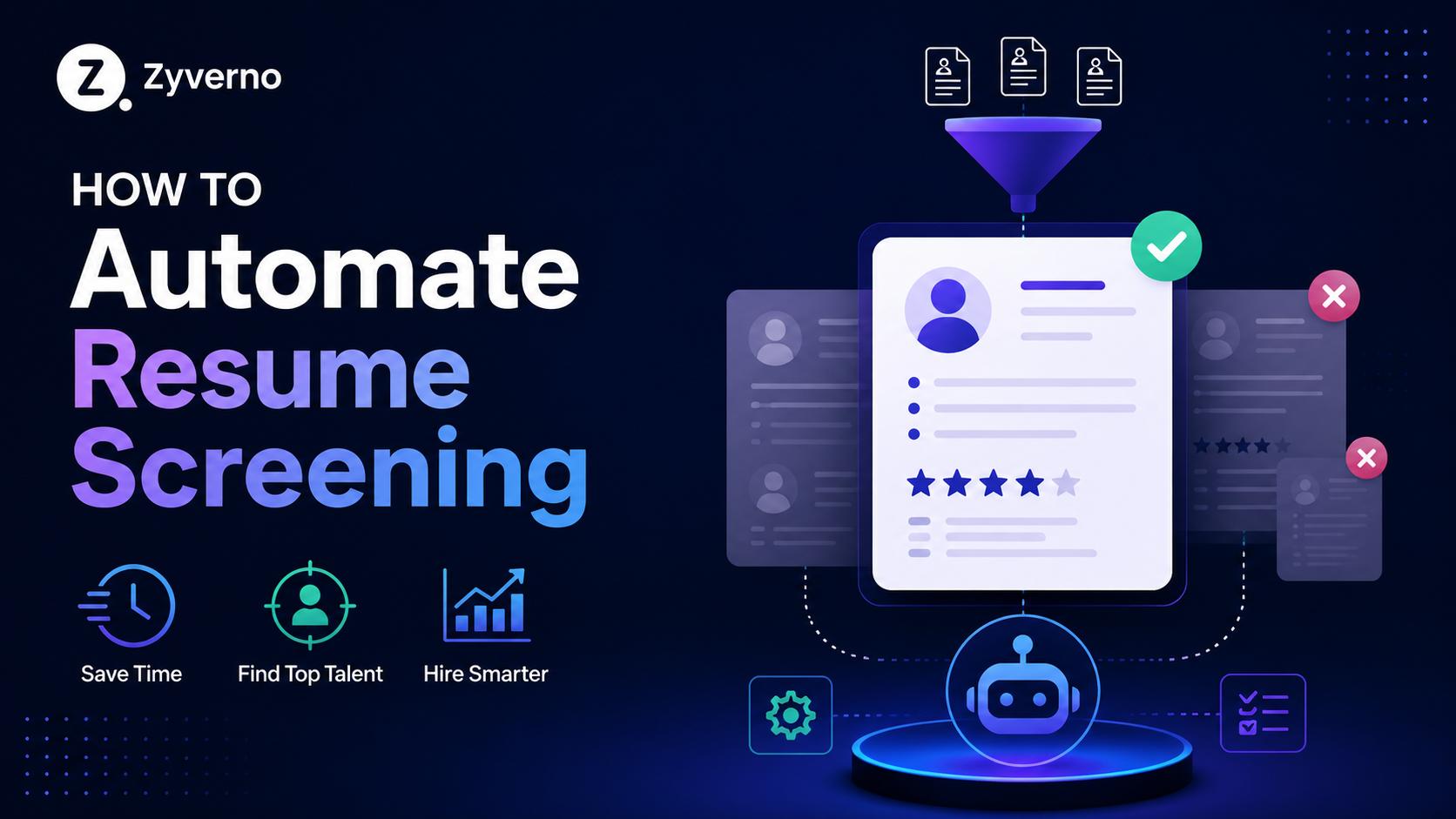
Automating resume screening means letting software read, score, and rank applications so your strongest candidates surface first. Done well, it turns a pile of five hundred into a ranked shortlist in minutes.
Done badly, it quietly rejects the people you needed. The difference is never the tool. It is what you tell the tool to look for.
What automating resume screening actually does
Automated screening parses each application into structured data. It matches that data against the criteria you set, scores each candidate, then ranks them so the strongest surface first.
The good versions rank the whole field for a human to review. The crude versions reject anyone who misses a keyword: same category, opposite outcome. The line between them is whether the tool reads for meaning or just matches text.
Two ways to automate the screen
Picking the setup matters more than picking the brand of software. There are two.
Human-assisted screening
The tool ranks every applicant, and a recruiter advances or rejects each one with a click. You keep full control and lose most of the manual reading. It is the safer starting point when your criteria are still rough.
Fully automated screening
The tool applies your criteria to every applicant and advances the ones who qualify, with no recruiter in the first pass. It is faster at high volume. It also demands that your criteria are right, because nobody is checking them mid-run.
What you gain by automating it
The upside shows up in three places.
- Speed. A tool ranks hundreds of applications in minutes, so screening a role stops eating a full workweek.
- Response time. Reply in hours instead of days, and fewer strong candidates cool off and take another offer first.
- Consistency. The same standard hits the first applicant and the five-hundredth, and the tool can ignore names and schools so the screen leans on skills.
The risk: a filter that rejects good people
The cost of blunt filters
What Employers Admit Their Filters Do
88%
of employers say their own automated tools filter out qualified candidates who do not match the exact criteria in the job description.
Source: Harvard Business School and Accenture, Hidden Workers: Untapped Talent.
Most automated screening still runs on keyword match. It looks for the exact job title, the named tool, the degree. Miss the phrase, and you are out, even when you can do the work.
According to the Harvard Business School Hidden Workers report, 88% of employers say their automated tools filter out qualified people. The tools cut them for not matching the exact wording in the job description. The filter is rejecting people the company would want to hire.
How to automate screening without rejecting good people
The blind spot
What a Keyword Filter Cannot See
The right column is qualified people, cut for how the resume was worded.
Caught by keywords
Cut, but qualified
The fix is to screen on what the job needs, not on how a resume is worded. Four moves get you there.
Write criteria as skills, not keywords
List what the person must be able to do, not the exact words they must type. "Can run a delivery route solo" beats "must have the title Route Manager." The first catches a warehouse lead who never held the title. Build the criteria the way a hiring scorecard does, with weighted signals rather than a keyword wishlist.
Score and rank, never auto-reject
Set automation to rank the whole field, not to bin the bottom. Ranking surfaces the strong and still lets you scan the rest. A hard cutoff throws away everyone below a line the tool drew, and the tool cannot see who it misjudged.
Add a conversation for what resumes hide
A resume cannot tell you if someone is available, motivated, or sharp on their feet. A short screening conversation can. This is the biggest leak in resume-only screening, and the place the strongest fix belongs.
A frontline hiring platform like Zyverno screens every applicant by voice or chat against your criteria. The signal a resume misses gets captured before anyone is cut.
Pilot on fifty, then audit who got cut
Run it on fifty resumes, then read the rejects yourself. If good people are sitting in the reject pile, your criteria are too narrow.
Fix them before you scale the mistake.
Keep a human on the cut line
The cut line
Let AI Rank. You Draw the Line.
The tool orders the field. Where the cut falls is your call.
AI ranks every applicant. You choose where the line falls, and you can still look below it. That is the difference between ranking and auto-rejecting.
Automation is allowed to sort. It is not allowed to reject. That single rule separates a time-saver from a liability.
Let the tool rank, then you decide where the cut falls. The 88% number is what happens when the machine draws the line instead. A ranked list keeps every candidate visible until a person makes the call.
The short version
Automating resume screening is not the risk. Automating a bad definition of "qualified" is.
Write criteria as skills. Let the tool rank instead of reject. Add a conversation for what the page cannot show, and keep the cut line human. That gets you the speed without burying the talent.